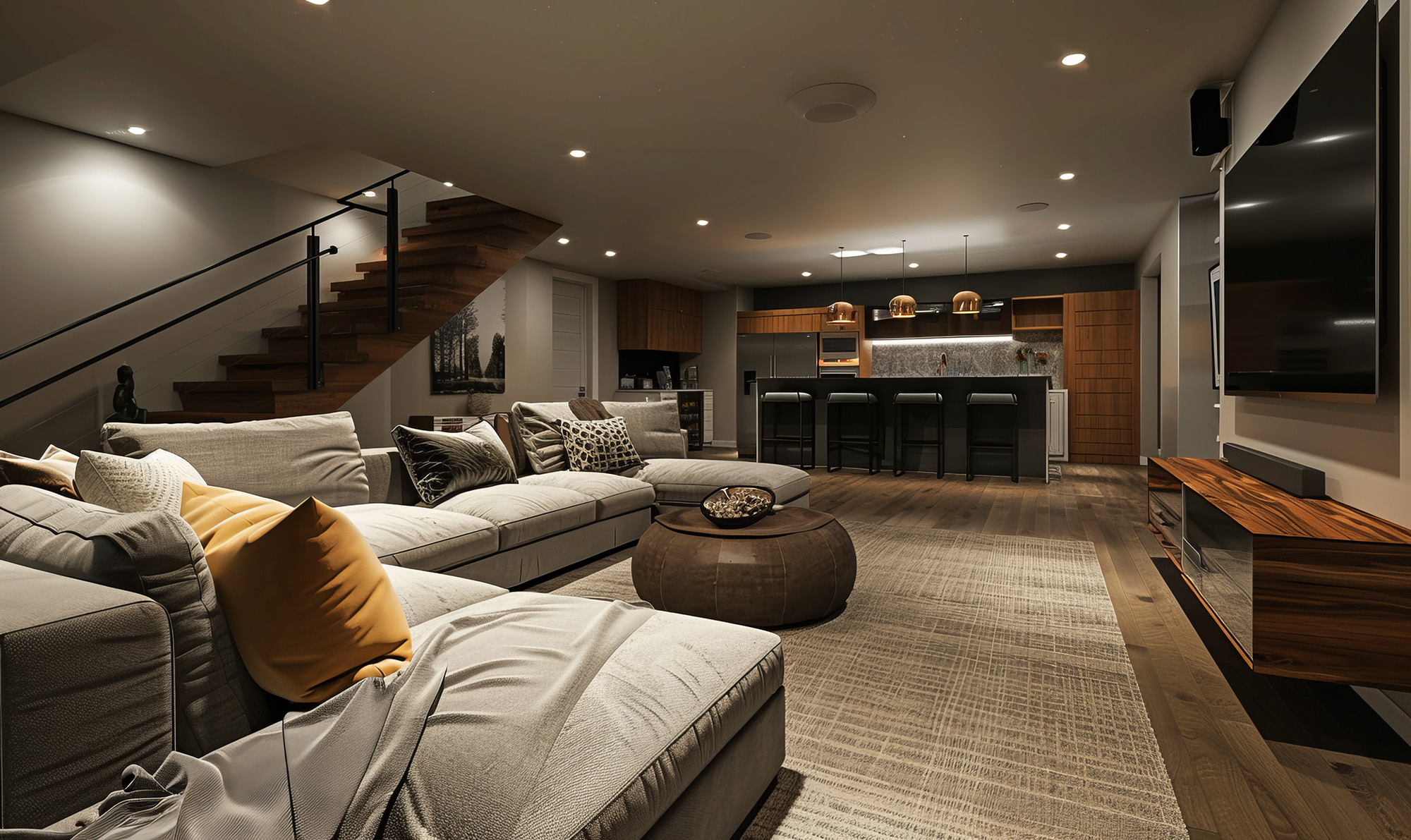
Look Beyond the Finished Floor When Planning a Basement
A basement can become much more than a place for storage. With thoughtful planning, it can serve as a family room, home office, guest suite, hobby space, or comfortable extension of the main living area. Flooring plays a major role in making that transformation feel complete, but choosing a material for a below-grade room requires a different approach from selecting flooring for an upstairs bedroom.
Hardwood is appealing because it brings natural grain, warmth, and continuity to an interior. However, basements have environmental conditions that can make traditional wood flooring more challenging to install. Moisture can move through concrete, indoor humidity can fluctuate, and water intrusion may occur in ways that are not immediately visible.
For homeowners in Ferndale, Washington, the decision should begin with the condition of the basement rather than the appearance of a hardwood sample. Understanding the differences between solid hardwood, engineered hardwood, and alternative flooring solutions can help you determine whether a wood floor is appropriate for your renovation.
Why Below-Grade Rooms Need Special Consideration
A basement is surrounded by soil and often includes a concrete slab. These conditions can expose the room to moisture-related challenges that are less common in above-grade living areas.
Concrete can transmit moisture vapor, even when the surface appears dry. Seasonal changes, drainage problems, plumbing leaks, and water entering through foundation walls can also affect the room. If moisture remains unresolved, it may damage flooring materials or contribute to problems beneath the finished surface.
Wood naturally responds to changes in moisture content. Depending on the product and conditions, excessive moisture can contribute to swelling, cupping, gaps, or other forms of movement. The flooring may look fine initially and still develop problems if the installation environment is unsuitable.
This is why a basement should be evaluated before any flooring is selected. A visually dry slab does not necessarily establish that it is ready for hardwood installation.
Start with Moisture Assessment and the Condition of the Slab
Before comparing wood species or finishes, investigate the condition of the basement and its concrete substrate. A suitable assessment considers the slab's moisture condition, the room's humidity, any history of water intrusion, and the requirements of the proposed flooring system.
Moisture testing should follow the flooring and installation-system manufacturers' specifications. Different products and installation methods may have different acceptance criteria, so a general rule of thumb is not a substitute for product-specific guidance.
Look for warning signs such as persistent dampness, water stains, musty odors, peeling coatings, or visible water entry. These signs do not identify every possible moisture issue, but they indicate that further investigation may be necessary.
If water has entered the basement previously, address the cause before installing a new floor. Drainage, foundation conditions, plumbing, and other sources of moisture may require attention. Installing hardwood over an unresolved problem can turn a flooring project into a much larger repair.
Understand the Difference Between Solid and Engineered Hardwood
Solid hardwood is manufactured from a single piece of wood, while engineered hardwood has a real-wood surface attached to a constructed core. Both offer the appearance of genuine wood, but their construction affects how they respond to environmental changes and which installation methods are appropriate.
Engineered hardwood is often considered for projects where dimensional stability is an important factor. Its layered construction can make certain products suitable for locations or installation systems where solid hardwood may be less appropriate. However, not every engineered hardwood product is approved for below-grade installation.
Solid hardwood generally has more restrictive installation considerations in below-grade environments. Its suitability depends on the product, the substrate, and the manufacturer's requirements. It should not be assumed appropriate for a basement simply because the room has been finished and climate-controlled.
The important question is not which category is universally better. It is whether the specific product and installation system are approved for the room's conditions.
Check the Manufacturer's Below-Grade Requirements
Flooring labels and product descriptions can be helpful, but they should not replace the manufacturer's full installation instructions. Before selecting a hardwood product, confirm whether it is permitted below grade and identify the substrate, moisture, and installation requirements.
Some engineered products may be approved for below-grade use when installed using a specified method. Others may have restrictions related to concrete, moisture levels, or particular installation systems.
Ask about the approved installation method, which may involve adhesive, a floating system, or another approach specified for the product. Do not assume that a method suitable for one hardwood floor is appropriate for another.
The subfloor preparation and moisture-control system must also be compatible with the selected flooring. If an underlayment or moisture barrier is required, it should be part of a complete system that meets the manufacturer's instructions.
Consider the Basement's Intended Use
A basement used as an occasional guest room may have different demands from one that functions as a busy family room. Before deciding on hardwood, think about how the finished space will be occupied.
A home office may benefit from a consistent visual connection to the upstairs living areas. A recreation room may experience more spills, furniture movement, and foot traffic. A guest suite may prioritize comfort and a welcoming appearance, while a basement with laundry equipment or plumbing fixtures may need more moisture-conscious material choices.
Also consider whether the room contains a bathroom, utility area, or exterior entrance. These locations may experience greater exposure to water and may require different flooring materials from the main living zone.
If the basement contains several distinct areas, you do not necessarily need to use the same flooring throughout. A carefully planned combination of materials can create visual continuity while allowing each space to meet its practical requirements.
Explore the Visual Benefits of Hardwood Without Rushing the Decision
One reason homeowners consider hardwood in a basement is its ability to create continuity with the rest of the home. Repeating a similar wood tone or visual style can make the lower level feel connected to the main floor.
If the exact hardwood product used upstairs is not suitable below grade, a different flooring material may provide a complementary appearance. The aim is to coordinate color, grain character, and overall design rather than force the same material into every room.
When comparing wood products, review samples beside the basement's wall colors, cabinetry, furniture, and lighting. Basements may receive less natural light than upper floors, so a sample can look different once installed in the actual room.
A coordinated palette can make the space feel intentional even when the flooring differs from the rest of the house.
When Another Flooring Material May Be More Appropriate
If the basement has unresolved moisture concerns or the proposed hardwood does not meet the installation requirements, another flooring option may be more practical. The right alternative depends on the room's use, the condition of the slab, the expected moisture exposure, and the desired appearance.
Tile may be worth considering in selected basement spaces because appropriate tile products can provide a hard, easy-to-clean surface. However, tile installation still requires a suitable substrate and proper moisture management. Tile should not be treated as a solution to active water intrusion or an unstable concrete slab.
Other flooring categories may also be appropriate depending on the room and the manufacturer's specifications. The key is to compare complete flooring systems rather than choosing an alternative based on a general claim about water resistance.
Explore the
tile flooring options at Morris Floors & Interiors if you are comparing materials for a basement or another space where moisture conditions influence the decision.
Plan the Installation from the Ground Up
A basement flooring project begins well before the first board or tile is installed. The existing slab may need cleaning, repairs, leveling, or additional preparation. Moisture testing and any necessary remediation should be completed before the floor is installed.
The installation plan should also account for floor height, door clearances, stairs, transitions, and adjoining rooms. Adding a new floor over concrete can change the finished height, which may affect doors and connections to other surfaces.
If the basement includes heating equipment, floor drains, plumbing access, or other service areas, these features should be considered during layout planning. Access and maintenance needs should not be overlooked in pursuit of a seamless design.
A clear project plan helps establish the work required and reduces the likelihood of discovering avoidable complications after installation begins.
Think About Long-Term Maintenance
Once the basement is finished, the flooring still needs to be maintained according to its specific requirements. Hardwood care generally involves removing dust and grit, promptly cleaning spills, using approved cleaning products, and maintaining suitable indoor conditions.
Basement owners should also remain alert to changes in the room. A new musty odor, water staining, or a noticeable change in the floor's appearance may indicate that the underlying environment needs attention.
Avoid using excessive water or cleaning methods that are not approved for the selected hardwood product. Keep the installation and product information available so future maintenance decisions can be based on the correct specifications.
If the basement has a history of moisture issues, periodic attention to drainage, plumbing, and indoor environmental conditions is also sensible.
Make the Right Decision for Your Basement
Hardwood can be an attractive option for certain basement projects, but its suitability depends on the specific product, substrate, moisture conditions, and approved installation method. Engineered hardwood may provide options that solid hardwood does not, yet no category should be considered automatically suitable for every below-grade space.
Start with a proper assessment, review the manufacturer's requirements, and compare alternative materials if the basement environment presents concerns. Making this decision before renovation begins can help protect both the appearance of the finished room and the investment in the project.
Explore the
hardwood flooring selection at Morris Floors & Interiors to begin comparing products. To discuss your basement renovation and the conditions that may affect material selection, visit the
contact page.